





Meta Description: New to the cloud? This droven.io cloud computing guide breaks down services, pricing, and security in plain English. Read it before you choose a provider.
Most people hear “the cloud” and picture something vague floating above their laptop. It’s not magic — it’s just someone else’s computer doing the heavy lifting for you. If you’ve ever streamed a movie, backed up your phone photos, or used Gmail, you’ve already used cloud computing without realizing it. This droven.io cloud computing guide is built for anyone who wants the real picture, without the jargon overload that usually comes with tech explainers.
Whether you’re a small business owner thinking about moving your files off a dusty office server, or a student trying to understand what your professor means by “AWS,” this guide walks through everything step by step.
What Cloud Computing Actually Means
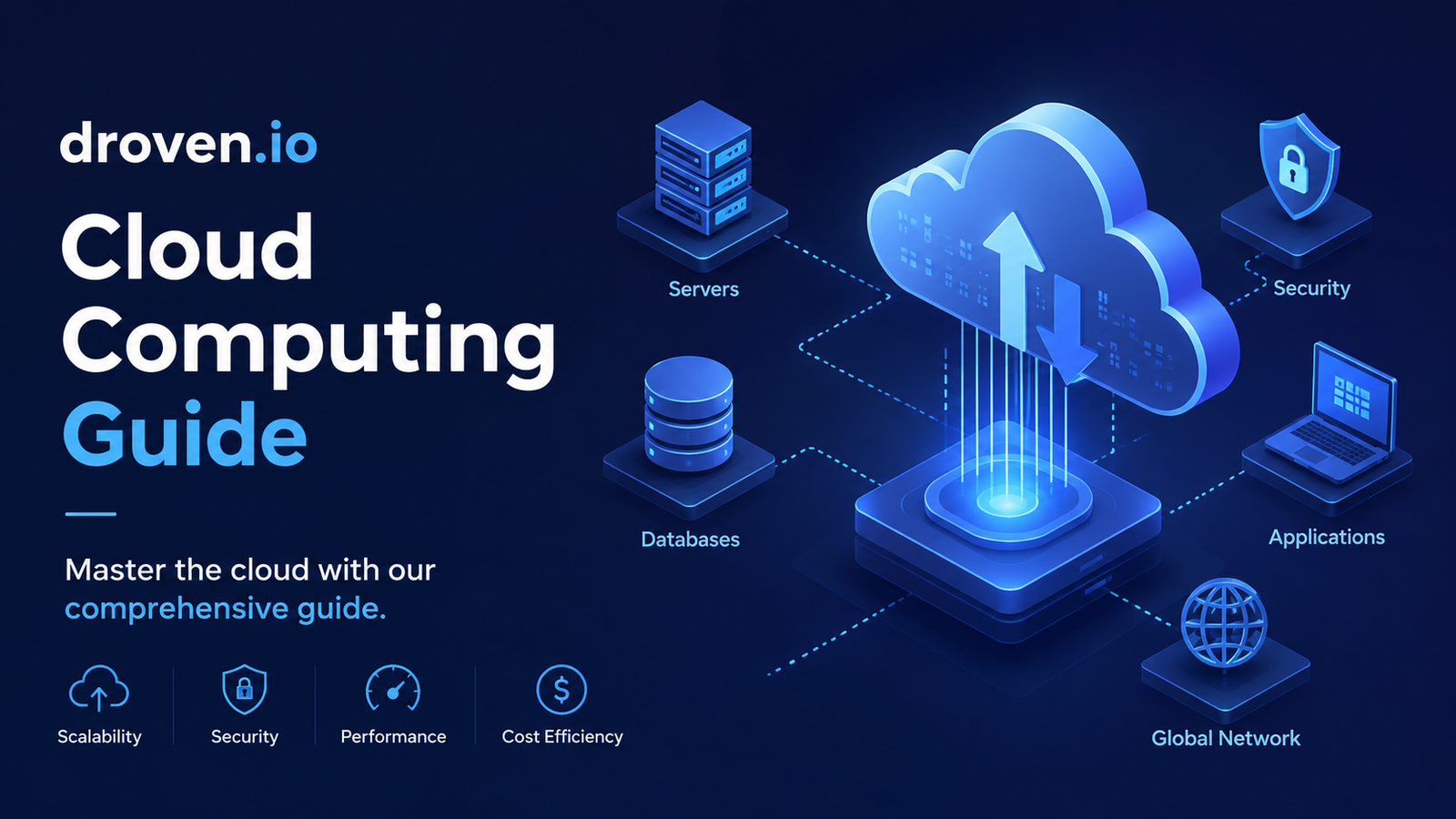
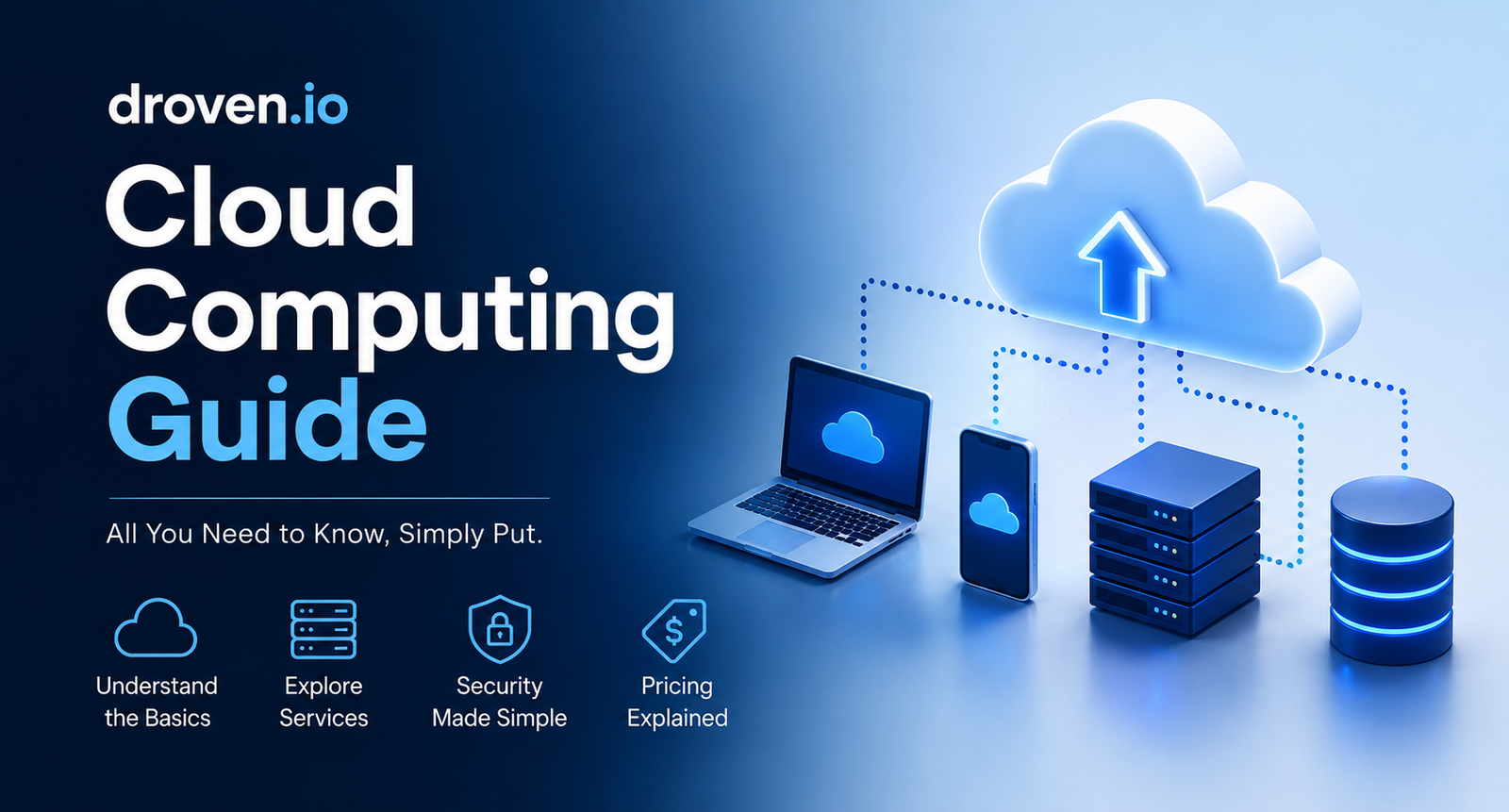
At its core, cloud computing is the delivery of computing services — storage, servers, databases, software, networking — over the internet instead of through physical hardware sitting in your office or home. Instead of buying a server, installing it, maintaining it, and eventually replacing it when it dies, you rent that capability from a provider like Amazon, Microsoft, or Google.
Think of it like electricity. A hundred years ago, factories had to generate their own power on-site. Now you just plug into the grid and pay for what you use. Cloud computing works the same way for computing resources. You don’t own the machine; you just use it and pay based on consumption.
This droven.io cloud computing guide focuses on making that shift understandable, because a lot of confusion comes from people trying to compare cloud services to something they already own, when really it’s closer to a utility.
The Three Main Types of Cloud Services
Cloud computing isn’t a single product — it’s a category with different layers, depending on how much control you want.
1. Infrastructure as a Service (IaaS)
This gives you the raw building blocks: virtual servers, storage, and networking. You still manage the operating system and applications yourself. Amazon EC2 and Microsoft Azure Virtual Machines fall into this bucket. It’s ideal for developers who want flexibility without buying physical hardware.
3. Software as a Service (SaaS)
This is the layer most people interact with daily. Think Dropbox, Zoom, or Netflix. You don’t manage anything — you just log in and use the service. No installation, no maintenance, no updates to worry about.
Understanding these three layers is the foundation of any solid cloud computing guide, because most confusion happens when people mix them up while comparing providers or pricing plans.
Real-Life Example: A Small Business Switching to the Cloud
Picture a local bakery chain with three locations. For years, they kept sales records on a single computer at the main store. When that computer crashed, they lost two months of inventory data. After that scare, they moved their point-of-sale system to a cloud-based platform.
Now, every location syncs sales data in real time to a central dashboard the owner can check from her phone. If one store’s system goes down, the data is still safe because it’s stored across multiple servers, not one machine in a back office. This is a textbook case of why cloud adoption isn’t just for tech companies — it’s for anyone who can’t afford to lose data to a single point of failure.
Real-Life Example: A Freelancer Using Cloud Storage
A freelance video editor used to carry three external hard drives to client meetings, terrified of losing footage. After switching to cloud storage with automatic backup, she edits directly from cloud-synced folders. If her laptop is stolen tomorrow, her work isn’t gone — it’s sitting safely on a remote server, accessible from any new device.
Real-Life Example: A Startup Scaling Without Buying Servers
A three-person startup building a mobile app needed to handle sudden spikes in traffic after a feature went viral on social media. Instead of buying expensive servers that would sit idle most of the year, they used a cloud provider that automatically scales resources up during traffic spikes and back down afterward. They paid only for what they used that week, instead of investing thousands in hardware they’d rarely need at full capacity.
Public, Private, and Hybrid Cloud — What’s the Difference?
- Public cloud: Shared infrastructure owned by a third-party provider (AWS, Azure, Google Cloud). Cost-effective and scalable, but you share resources with other customers.
- Private cloud: Dedicated infrastructure used by a single organization. More control and security, but more expensive to maintain.
- Hybrid cloud: A mix of both, letting sensitive data stay private while less critical operations run on public infrastructure.
Most businesses today lean toward hybrid setups because it balances cost with control. A hospital, for example, might keep patient records on a private cloud for compliance reasons while running its appointment-booking website on a public cloud.
Step-by-Step: How to Get Started With Cloud Computing
- Identify your need first. Are you storing files, running an app, or hosting a website? Don’t pick a provider before knowing your use case.
- Compare the big three providers. AWS, Microsoft Azure, and Google Cloud all offer free tiers to test before committing.
- Start small. Move one non-critical function to the cloud before migrating everything.
- Set a budget alert. Cloud pricing is usage-based, and costs can climb quickly if left unmonitored.
- Review security settings. Enable multi-factor authentication and restrict access permissions from day one.
- Monitor performance monthly. Most providers offer free dashboards showing usage trends and cost breakdowns.
Following this order avoids the most common mistake beginners make: signing up for a service before understanding what they’re actually trying to solve.
Is Cloud Computing Safe?
This is one of the most searched questions related to any cloud computing guide, and the honest answer is: it depends on how it’s configured, not just which provider you pick. Major providers invest heavily in security — often more than a small business could afford on its own. But misconfigured settings, weak passwords, and lack of encryption are usually the real cause of data breaches, not the cloud itself.
How Much Does Cloud Computing Cost?
Pricing is usage-based, meaning you pay for storage, processing power, and data transfer as you consume them. Costs can range from a few dollars a month for personal storage to thousands for enterprise-level infrastructure. Free tiers exist for testing, but it’s easy to exceed them without noticing, so setting billing alerts is a smart first move.
Can I Switch Cloud Providers Later?
Yes, though it takes planning. This process, called cloud migration, involves transferring data and applications from one provider to another. It’s rarely instant, and businesses often run both systems in parallel briefly to avoid downtime.
Do I Need Technical Skills to Use Cloud Services?
Not necessarily. SaaS products like Google Workspace or Dropbox require no technical background at all. IaaS and PaaS services do require more comfort with configuration, though most providers offer guided setups for beginners.
Common Mistakes People Make With Cloud Computing
- Assuming “cloud” automatically means “backed up” — you still need to configure backups properly.
- Ignoring cost monitoring until the bill arrives.
- Using weak or reused passwords for cloud accounts.
- Not reading data residency policies, which matter for businesses handling sensitive customer data.
- Overcomplicating the first migration instead of starting with one simple task.
Avoiding these mistakes early saves both money and stress later, especially for small teams without a dedicated IT department.
Final Thoughts
Cloud computing isn’t a trend anymore — it’s the default way most software and storage get delivered, from the apps on your phone to the systems running hospitals and banks. The confusion usually isn’t about the technology itself; it’s about the terminology surrounding it. Once you understand the difference between IaaS, PaaS, and SaaS, and know how public, private, and hybrid setups work, the rest becomes much easier to navigate.
If you’re still deciding where to begin, start small: pick one task, one provider, one free tier, and get comfortable before scaling up. For more breakdowns like this, check out droven.io‘s other technology guides covering related topics like cybersecurity and AI automation.
Human Touch Instructions:
- Rewrite the intro in simpler style here: The opening paragraph (“Most people hear ‘the cloud’…”) — swap in a shorter, more conversational first line, like starting with a question (“Ever wondered where your phone photos actually go when they ‘back up’?”).
- Add a personal/example line here: In the “Real-Life Example: A Freelancer Using Cloud Storage” section — insert a first-person anecdote or a quote from an actual freelancer if you have one, to make it feel less templated.
- Simplify these parts: The “Public, Private, and Hybrid Cloud” section and the “Three Main Types of Cloud Services” section both lean slightly technical — trim the definitions down to one sentence each if writing for a beginner audience, and move the fuller explanation into a linked or expandable section instead.
Want to be notified when Claude respon
read more trading blogs on world daily drift.