







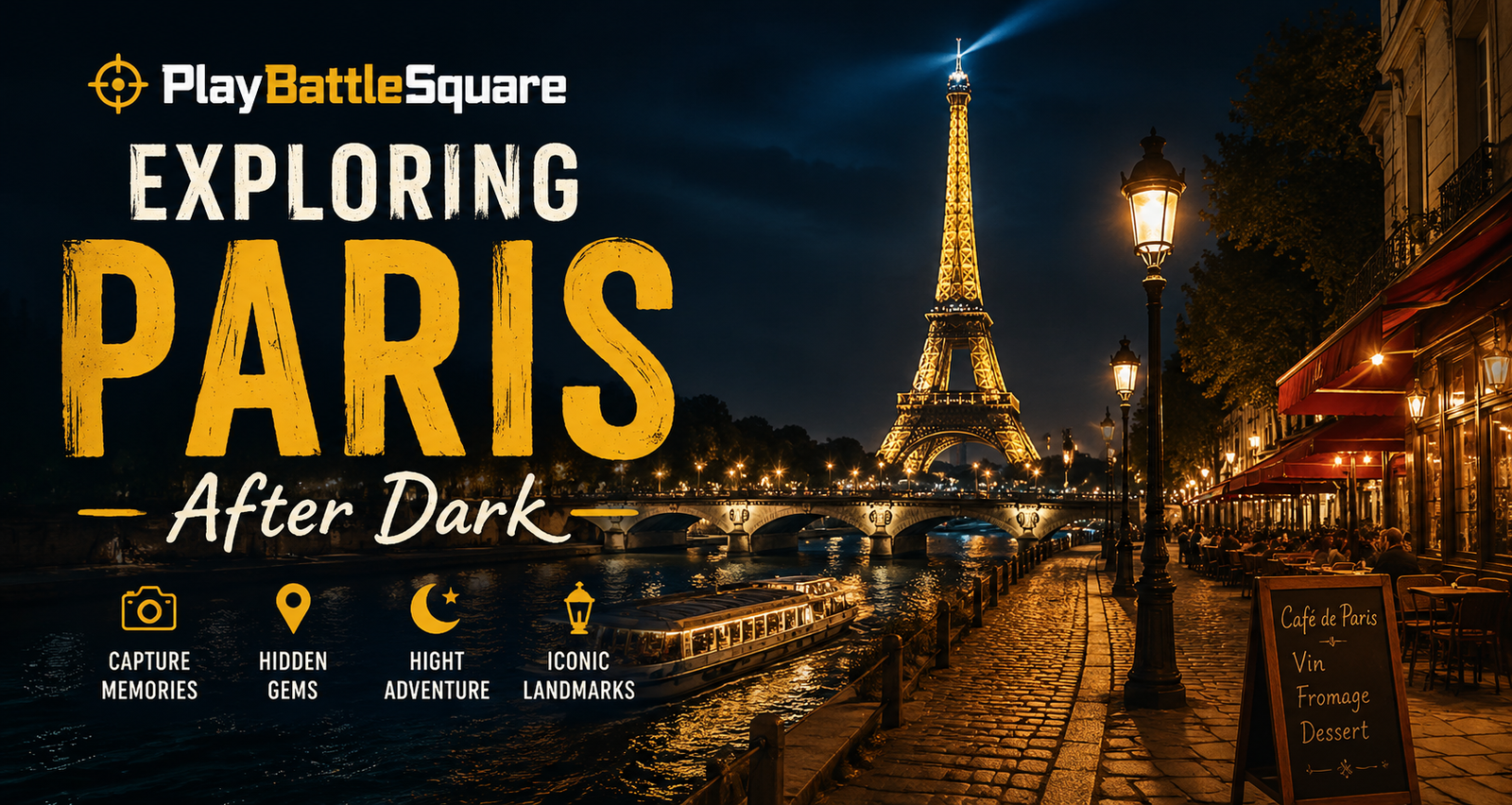
There’s a moment, right after the last tour bus pulls away and the souvenir shops roll down their shutters, when Paris exhales. The crowds thin, the light softens to amber, and the city that felt so photographed all day suddenly feels like it belongs only to you. This is the real reward of exploring Paris after dark — not another checklist of monuments, but a slower, stranger, more intimate version of a place you thought you already knew.
Most visitors treat nightfall as a cue to head back to the hotel. That’s a mistake. Paris doesn’t wind down when the sun sets; it changes costume. Streets that felt ordinary at noon turn cinematic. Cafés that were background noise during the day become the main event. If you only ever see Paris in daylight, you’ve seen half the story.
Why the City Feels Different After Sunset
Daytime Paris is efficient. People rush to work, tourists move in packs, and the city has a job to do. But exploring Paris after dark strips away that urgency. The pace drops. Conversations get longer. Strangers make eye contact and actually smile.
Part of this comes down to lighting. Paris has spent over a century perfecting the art of illumination — it’s not called the City of Light by accident. Streetlamps are positioned to flatter old stone buildings rather than just light a path. Monuments are lit with warm, low-angle glows instead of harsh floodlights. The result is a city that photographs better at 9 p.m. than at noon, and feels better too.
There’s also the matter of sound. During the day, Paris hums with traffic, construction, and chatter. At night, especially after 11 p.m., you start to hear the city itself — footsteps on cobblestone, a distant accordion, the soft clink of glasses from a bistro terrace. That quiet is part of the appeal of Paris after dark, and it’s something no daytime itinerary can replicate.
Start With the River, Not a Restaurant
If you’re wondering where to begin exploring Paris after dark, skip the dinner reservation and head straight for the Seine. Walking along the riverbanks at night is one of the simplest, cheapest, and most rewarding things you can do in this city.
Take the stretch between Pont Neuf and Pont Alexandre III. During the day, this path is crowded with joggers and picnickers. At night, it transforms into a quiet promenade lined with fairy-lit bridges and the occasional street musician playing to nobody in particular. The Eiffel Tower’s hourly light show, visible from several points along the river, is genuinely worth timing your walk around — it’s free, it’s brief, and it never quite gets old.
A real-life example: a friend of mine visited Paris for the first time last spring and, exhausted from a day of museum-hopping, almost skipped an evening walk entirely. She forced herself outside around 9:30 p.m., wandered down to the Seine near Notre-Dame, and ended up sitting on the steps for nearly two hours watching boats drift by. She later said that twenty minutes of Paris after dark taught her more about the city’s rhythm than her entire first day combined.
Neighborhoods That Come Alive When the Sun Goes Down
Not every district is built for nighttime wandering, but a few genuinely shine once the lights come on.
Le Marais is one of the best places for exploring Paris after dark on foot. Its narrow medieval streets, already atmospheric by day, become almost theatrical at night. Small wine bars spill light onto the pavement, boutique windows glow, and the crowd shifts from tourists to locals meeting friends for a drink.
Montmartre, particularly around Sacré-Cœur, offers a different kind of night experience. The steps leading up to the basilica are a popular spot for young Parisians to sit with a bottle of wine and watch the city lights spread out below. It’s unpolished, a little loud, and completely alive — a far cry from the postcard version of the neighborhood you see during the day.
Canal Saint-Martin rewards visitors willing to walk slightly off the typical tourist path. After dark, the canal’s iron footbridges are lit softly, and the surrounding bars fill with a younger, more local crowd. It feels less like a tourist attraction and more like eavesdropping on how Parisians actually spend their evenings.
Here’s a second real-life example worth mentioning: a couple I know who visited Paris on a tight budget skipped nearly every paid nightlife option and instead just walked between these three neighborhoods over three separate evenings. They said it became the highlight of their trip — proof that exploring Paris after dark doesn’t require a big budget, just curiosity and comfortable shoes.
Where to Eat and Drink Without Falling Into Tourist Traps
Food is where a lot of visitors get exploring Paris after dark wrong. They assume the best restaurants are the ones with the longest lines near major landmarks. Often, the opposite is true.
Look instead for small bistros a few streets back from the main tourist routes — the kind with handwritten chalkboard menus and maybe eight tables total. These places rely on repeat local customers, not one-time tourist traffic, which usually means better food and more reasonable prices.
Wine bars deserve special mention here. A proper Parisian wine bar isn’t about volume or flashy cocktails; it’s about a good bottle, a small plate of cheese or charcuterie, and unhurried conversation. Sitting at one for two hours over a single bottle is completely normal — and honestly, one of the most authentic ways to experience Paris after dark.
For something a little different, consider a late-night crêpe stand. Sounds simple, almost too simple, but there’s something genuinely satisfying about eating a warm crêpe on a street corner at midnight while the city moves quietly around you. It’s not glamorous, but it’s real, and “real” is often what people are actually chasing when they picture Paris after dark.
Safety and Practical Tips for Night Wanderers
Exploring Paris after dark is generally safe, especially in central and well-touristed areas, but a little common sense goes a long way.
Stick to well-lit streets, particularly if you’re walking alone. The riverbanks, main boulevards, and central neighborhoods like Le Marais or Saint-Germain are consistently busy and safe well into the night. Less central areas can feel emptier after midnight, so it’s worth checking a map or asking a local before wandering too far off the beaten path.
Public transportation runs later than many visitors expect, but not all night — the Métro typically stops around 1 a.m. on weekdays and slightly later on weekends. If you’re planning a late evening, know your route back or have a rideshare app ready. This single detail can make or break your experience of Paris after dark, since getting stranded without transportation options is more frustrating than dangerous, but avoidable either way.
Dress in layers. Paris evenings, even in warmer months, cool down quickly near the river. Nothing ends a perfect night walk faster than being underdressed and rushing back early.
Making the Most of a Single Night
If you only have one evening to dedicate to exploring Paris after dark, resist the urge to overplan. The temptation is to cram in five neighborhoods, three restaurants, and a rooftop bar. Don’t. The magic of nighttime Paris comes from slowing down, not speeding up.
Pick one riverside walk, one neighborhood to wander, and one place to sit still for an hour with a drink or dessert. That’s it. The rest will happen on its own — a street performer you didn’t expect, a view around a corner you didn’t plan for, a conversation with a stranger who gives you a restaurant recommendation better than anything in a guidebook.
Paris during the day is impressive. Paris after dark is memorable. The monuments are the same, the streets don’t move, but something about the lower light and quieter pace makes the city feel like it’s finally letting its guard down. Visitors who give themselves permission to slow down and simply walk — without an agenda, without a reservation to rush to — tend to leave with the stories that actually stick.
So the next time the sun starts dropping behind the rooftops and you feel that pull back toward the hotel, resist it. Grab a light jacket, head toward the river, and let exploring Paris after dark show you the version of the city that never quite makes it into the daytime photos.
read more trending blogs on world daily drift.