






You walk into some homes and instantly want to sink into the couch and stay a while. You walk into others — beautifully decorated, magazine-perfect — and feel like you shouldn’t touch anything. That difference has a name, and it’s exactly what drhomey interior design is built around: spaces that look good and feel good to live in.
This isn’t about throwing out your style for something cozier. It’s about layering warmth, texture, and personality into a room so it stops feeling like a showroom and starts feeling like yours. Below is a practical, no-fluff walk-through of how to actually pull that off, room by room, choice by choice.
What Drhomey Interior Design Actually Means
The term gets thrown around loosely, so let’s define it properly. Drhomey interior design is a style philosophy that prioritizes comfort, warmth, and everyday livability over strict formality or trend-chasing. It borrows the softness of cottagecore, the practicality of Scandinavian design, and the personal clutter of maximalism — then blends them into something that feels calm rather than chaotic.
Think worn leather armchairs, mismatched but coordinated cushions, shelves that hold real books instead of staged ones, and lighting that’s soft enough to read by at 9 p.m. The goal of drhomey interior design isn’t perfection. It’s the feeling you get the moment you kick off your shoes.
Why People Are Moving Away From Cold, Minimalist Spaces
For years, minimalism ruled. Empty countertops. White walls. One statement chair with nothing else around it. It photographed beautifully, but plenty of homeowners quietly admitted it didn’t feel like them.
Drhomey interior design pushes back against that sterility without swinging into hoarder territory. It says: your home can have character, texture, and a few imperfect edges, and it will still look intentional. A slightly worn rug in the hallway, a stack of paperbacks on the coffee table, a hand-knit throw over the sofa arm — these aren’t flaws. They’re what make a space feel inhabited instead of staged.
Real example: A couple in a two-bedroom apartment swapped their single oversized abstract canvas for a gallery wall of family photos, travel postcards, and a few thrifted frames. The room went from “nice but forgettable” to “the one guests always comment on.”
The Core Ingredients of a Homey Interior
If you strip drhomey interior design down to its basics, it usually comes down to five things working together.
Layered Lighting
Overhead lighting alone makes a room feel like an office. Add table lamps, a floor lamp in the reading corner, and maybe a string of warm-white fairy lights along a shelf. Three light sources at different heights instantly soften a space.
Natural Textures
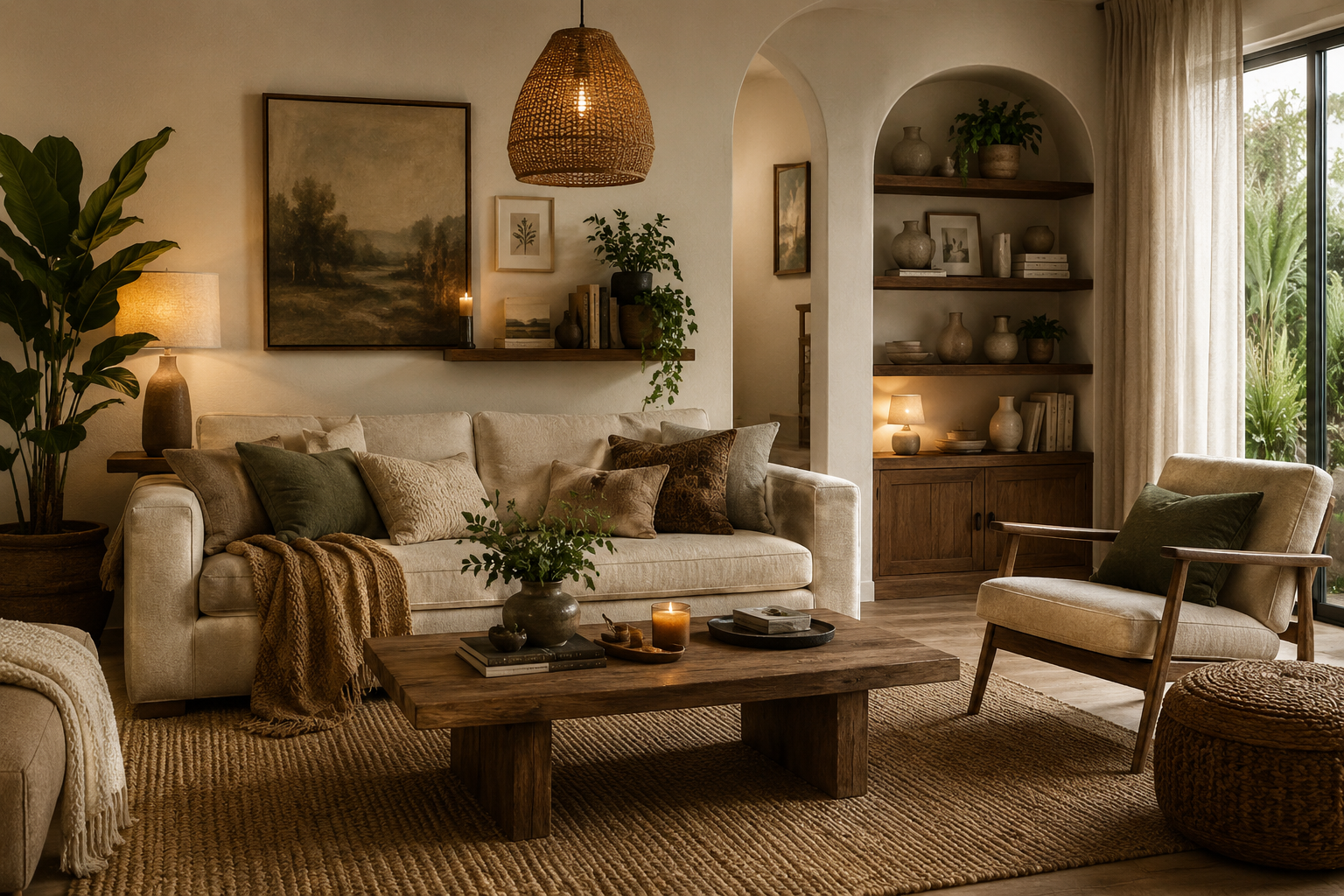
Wood, wool, linen, rattan, ceramic. These materials age well and carry warmth that plastic or high-gloss finishes simply can’t replicate. A rattan pendant light or a linen throw pillow does more for a homey interior design scheme than most people expect.
Soft, Layered Textiles
Rugs, throws, and cushions aren’t just decoration — they’re acoustic softeners too. A room full of hard surfaces echoes and feels cold, literally and emotionally. Layer a rug under the coffee table, a throw over the sofa back, and two or three cushions in complementary (not identical) patterns.
Personal Objects, Displayed Proudly
This is the part most design guides skip. A homey interior design approach makes room for your actual life: the ceramic mug your kid made, the map from your honeymoon, the record collection you never play but love looking at. Curate lightly, but don’t erase yourself from your own home.
Warm, Grounded Color Palettes
Cool grays and stark whites can feel homey design too, but only when balanced with warmer accents — terracotta, mustard, olive, deep browns. If your walls are neutral, let your textiles and accessories carry the warmth.
Room-by-Room: Bringing Drhomey Interior Design to Life
The Living Room
Start with seating that invites lounging, not posing. A deep sofa with a few oversized cushions beats a stiff, symmetrical arrangement every time. Add a coffee table that can hold a mug ring or two without you panicking. One real example worth borrowing: a friend replaced her glass coffee table with a reclaimed wood one specifically because “it already looks like it’s lived a life.”
The Kitchen
Open shelving with mismatched but color-coordinated dishware, a wooden fruit bowl instead of a sleek metal one, and a herb pot on the windowsill go a long way. Drhomey interior design in the kitchen is less about matching sets and more about things that look like they’re actually used.
The Bedroom
Skip the hotel-perfect, tightly tucked bedding. A duvet that’s a little rumpled, layered blankets in two tones, and a bedside lamp with warm bulbs turn a bedroom from a place you sleep into a place you want to linger in on a Sunday morning.
The Entryway
This is the room people underestimate. A bench, a hook rail with actual coats hanging (not empty ones for show), and a small tray for keys make the entrance feel welcoming from the second the door opens — which sets the tone for the whole homey interior design experience.
Common Mistakes That Undercut a Homey Feel
Even well-intentioned homeowners trip up here. A few patterns to watch for:
- Over-matching everything. Perfectly matched furniture sets can feel more like a showroom floor than a home. Mix eras and finishes instead.
- Too much cold lighting. Bright white LED bulbs kill warmth fast. Stick to warm-white tones (around 2700K–3000K) for anything meant to feel cozy.
- Hiding personality for the sake of resale value. You can always neutralize a home before selling — no need to live in a blank slate now.
- Skipping texture in favor of clean lines only. A room can be tidy and textured. They’re not opposites.
A Budget-Friendly Path Into Drhomey Interior Design
You don’t need a full renovation to shift a space. Here’s a simple, low-cost sequence that works in almost any home:
- Swap one overhead bulb setup for a warm-toned lamp in the same room.
- Add one textured throw or rug — thrifted or secondhand is fine, and honestly often better.
- Display three personal items you’ve been storing in a drawer.
- Introduce one wood or ceramic piece to break up hard, glossy surfaces.
- Step back after a week and see what still feels missing — homey interior design is iterative, not a one-weekend fix.
A single mom redoing her rented apartment used almost exactly this approach: a $15 lamp, a secondhand wool rug, framed kids’ drawings instead of store-bought art, and a wooden bowl for her keys by the door. Total spend was under $60, and the apartment went from feeling temporary to feeling like home within a single afternoon.
Making It Last: Homey Design Isn’t a One-Time Project
The biggest misunderstanding about drhomey interior design is treating it like a finished checklist. Real homey spaces evolve — a new plant here, a swapped-out cushion there, photos updated as your life changes. That ongoing evolution is actually part of what makes a space feel lived-in rather than staged for a single moment in time.
If you’re just starting out, don’t try to overhaul every room at once. Pick the space you spend the most time in, apply the layered lighting, texture, and personal-object principles above, and let it breathe for a couple of weeks. Homes rarely feel homey overnight — they feel homey because they’re allowed to grow with the people living in them.
At its core, drhomey interior design is a reminder that a beautiful home and a comfortable one aren’t competing goals. With the right mix of light, texture, and a little bit of yourself scattered throughout each room, you can have both — without spending a fortune or losing the character that makes your space unmistakably yours.
read more trending blogs on world daily drift.