






Walk into ten different homes and you’ll notice something interesting — the ones that feel the best rarely have the biggest budgets. They just have intention behind every choice. That’s the whole philosophy baked into interior design DrHomey: spaces built around how people actually live, not how a showroom wants them to look.
If you’ve ever stood in your living room wondering why it looks “fine” but feels flat, this article is for you.
What Makes Interior Design DrHomey Different
Most design approaches start with trends. Interior design DrHomey starts with people. Before a single color swatch or furniture piece enters the conversation, the focus is on how a family moves through their home — where they eat breakfast, where the kids do homework, where guests naturally gather.
This human-first approach is what separates interior design DrHomey from cookie-cutter styling. Instead of forcing a home into a rigid aesthetic, the goal is to shape the aesthetic around the life already happening inside those walls.
Take Meera, a graphic designer working from a cramped one-bedroom apartment in Pune. Her biggest complaint wasn’t the size — it was that her “workspace” was really just a laptop balanced on a dining chair. A DrHomey-style consultation didn’t add square footage; it repositioned a slim console table under a window, added a task lamp, and used a room divider to visually separate work from rest. Same apartment, completely different feeling.
Core Principles Behind Interior Design DrHomey
1. Function Before Flourish
Every great room answers a question: what happens here? Interior design DrHomey always asks that first. A coffee table that also stores blankets. A hallway bench that doubles as shoe storage. Beauty follows usefulness, not the other way around.
2. Warmth Over Perfection
Sterile, magazine-perfect rooms often feel cold in real life. Interior design DrHomey leans into texture — a woven throw, mismatched cushions, a slightly imperfect handmade vase — because those small imperfections are what make a space feel lived-in rather than staged.
3. Budget-Conscious Creativity
You don’t need a five-figure renovation to see results. A fresh coat of paint, rearranged furniture, and smarter lighting can transform a room for a fraction of what people assume interior design costs. This is one of the biggest reasons people search out interior design DrHomey advice in the first place — they want real results without emptying their savings.
Room-by-Room: How the DrHomey Approach Plays Out
Living Rooms That Invite Conversation
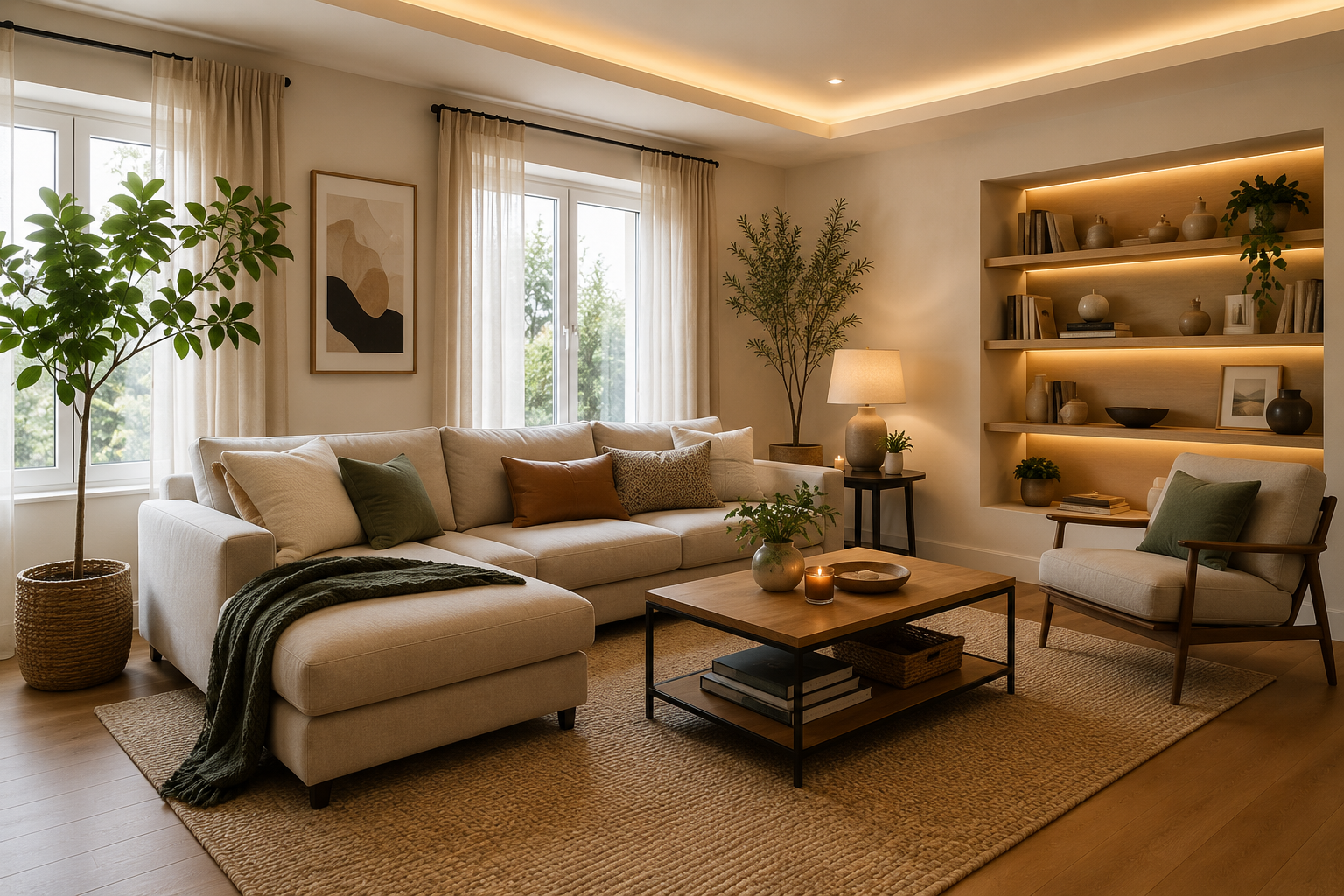
Instead of pushing every sofa against a wall, interior design DrHomey often recommends angling seating toward a central point — a coffee table, a rug, a fireplace — so conversation feels natural instead of formal. Rajesh and his wife in Bengaluru had a living room where guests always ended up standing near the kitchen because the seating felt disconnected. Simply pulling the sofa a few feet off the wall and adding a round rug underneath solved it. People started sitting down again.
Bedrooms Built for Actual Rest
Bedrooms get the most neglect, ironically, since they’re the room we spend the most unconscious hours in. A DrHomey-inspired bedroom prioritizes soft, layered lighting over one harsh overhead bulb, breathable bedding, and decluttered nightstands. Small changes, big difference in sleep quality — and that’s a benefit most design blogs forget to mention.
Kitchens That Work Harder
Open shelving, labeled jars, a dedicated coffee corner — these aren’t just Pinterest trends. In interior design DrHomey projects, kitchens get treated like the command center of the home. A family in Chennai reorganized their kitchen not by buying new cabinets, but by grouping items by task: a baking zone, a breakfast zone, a snack zone for the kids. Everything felt more efficient within a week.
Color and Texture: The DrHomey Formula
A lot of people assume good design means bold, expensive statement pieces. In reality, interior design DrHomey leans on a simple formula:
- A neutral base (walls, large furniture) that won’t feel dated in five years
- One or two accent colors repeated in small doses — a cushion here, a vase there
- At least three textures in every room: something soft (fabric), something hard (wood or stone), something reflective (glass or metal)
This formula sounds almost too simple, but it’s exactly why it works. It gives structure to decisions that would otherwise feel overwhelming, especially for people redesigning a space for the first time.
Lighting: The Most Underrated Tool in Interior Design DrHomey
Ask any designer what single change makes the biggest difference, and lighting usually tops the list. Interior design DrHomey treats lighting as layered, not singular — combining ambient light (ceiling fixtures), task light (desk lamps, under-cabinet strips), and accent light (candles, string lights, wall sconces).
A small Mumbai apartment owner, Anaya, swapped her single ceiling light for a mix of a floor lamp and two table lamps. She didn’t touch the walls, the furniture, or the flooring. Visitors still commented that the apartment “felt renovated.” That’s the power of getting light right.
Small Space, Big Impact: DrHomey Tricks for Compact Homes
Not everyone has room to spare, and interior design DrHomey has become especially popular among apartment dwellers for exactly this reason. A few go-to moves:
- Mirrors placed opposite windows to bounce natural light deeper into a room
- Furniture with exposed legs to create a sense of visual space underneath
- Vertical storage instead of wide dressers or bookshelves
- Multi-purpose furniture — ottomans with storage, extendable dining tables
These aren’t groundbreaking ideas individually, but combined with intention, they add up to a home that feels far bigger than its square footage suggests.
Sustainability Woven Into the Process
An often-overlooked piece of interior design DrHomey is its lean toward sustainable choices — not as a marketing angle, but as a practical one. Reupholstering an old chair instead of replacing it. Choosing solid wood pieces that last decades over particleboard that warps in a few years. Sourcing from local artisans instead of mass-produced imports. It’s design that respects both the wallet and the planet.
How to Start Your Own DrHomey-Style Makeover
You don’t need a professional consultation to apply these ideas. Start small:
- Pick one room, not the whole house. Momentum builds from small wins.
- Declutter first. No design choice matters if the space is buried under clutter.
- Live with the room for a week before buying anything. Notice what you actually do in it.
- Add layers slowly — lighting, then texture, then color accents.
- Trust imperfection. A slightly mismatched but comfortable room beats a perfectly coordinated one that feels untouchable.
This gradual approach is exactly why interior design DrHomey resonates with so many first-time homeowners and renters alike — it removes the pressure to get everything “right” immediately.
Final Thoughts
At its heart, interior design DrHomey isn’t a rigid style you copy from a catalog — it’s a mindset. It says your home should serve your life, reflect your personality, and feel warm enough that you actually want to be in it. Whether you’re working with a sprawling house or a single rented room, the same principles apply: function first, warmth always, and small, thoughtful changes over expensive overhauls.
The next time a room in your home feels “off” but you can’t pinpoint why, try asking the question interior design DrHomey always starts with — not “what should this look like,” but “how do I actually want to live here?” The answer usually points the way foVertical storage
read more trending blogs on world daily drift.