







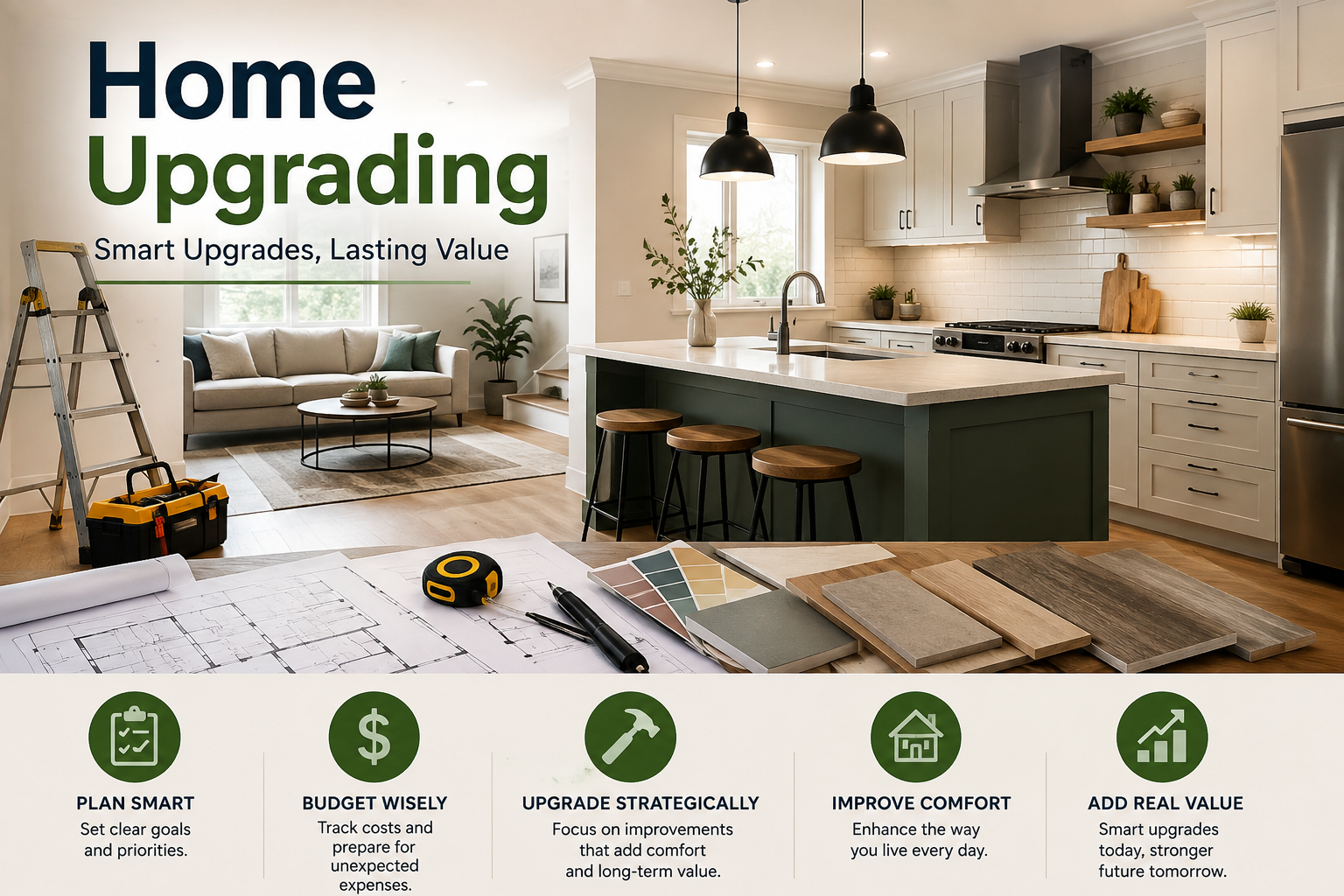
You’ve got a list of ten things you want to fix around the house, a browser tab full of Pinterest boards, and a budget that definitely won’t cover all of it. Sound familiar? That’s exactly where most homeowners get stuck — not because they lack ideas, but because they lack a plan. Good home upgrading advice isn’t about picking the trendiest tile or the flashiest appliance; it’s about sequencing decisions so your money and effort actually compound instead of leaking away.
This guide walks through the home upgrading advice that actually moves the needle the kind that saves you from regret six months down the line.
Start With What’s Broken, Not What’s Boring
It’s tempting to jump straight to the fun stuff — a new kitchen island, a soaking tub, a statement wall. But the first rule of solid home upgrading advice is boring but true: fix the bones before you decorate the skin.
Take Priya, a homeowner in her early thirties who bought a 1970s split-level. She wanted an open-concept kitchen from day one. Instead, an inspector flagged aging knob-and-tube wiring in the attic. She spent her first year’s budget on electrical work nobody would ever see. Frustrating? Sure. But it meant her eventual kitchen remodel didn’t have to be redone two years later because of a wiring fire risk hiding behind the drywall.
Before any cosmetic project, get a professional to check:
- Roof condition and remaining lifespan
- Plumbing (especially
- Electrical panel capacity
- Foundation cracks or drainage issues
Skipping this step is the single most common mistake in home renovation planning, and it’s the one piece of home upgrading advice that pays for itself every time.
Budget in Three Layers, Not One Number
Most people set a single renovation budget and then panic when it blows past that number in week two. A smarter approach splits your budget into three layers:
- Core cost — materials, labor, permits
- Contingency fund — 15–20% set aside for surprises (and there will be surprises)
- Wish-list fund — the nice-to-haves you’ll only spend on if the first two layers stay intact
Marcus and his wife renovated their bathroom with a $12,000 core budget. They also set aside $2,000 in contingency. When the contractor discovered water damage behind the shower tile, that contingency fund covered the repair without derailing the whole project. Without it, they would have either stopped mid-renovation or gone into debt to finish.
This layered approach is home upgrading advice that translates directly into peace of mind — you’re not just budgeting for the project you want, you’re budgeting for the project you might actually get.
Prioritize Upgrades That Pay You Back
Not every upgrade returns equal value, whether you’re planning to sell in a year or stay for two decades. Kitchens and bathrooms consistently deliver the strongest return, but there are quieter winners too — attic insulation, garage door replacement, and exterior paint tend to recoup a surprisingly large share of their cost.
If you’re weighing options, ask yourself three questions before committing:
- Will this upgrade lower my monthly utility bills?
- Will this upgrade appeal to a broad range of future buyers, or just to me?
- Does this upgrade fix a functional problem, or only a visual one?
A downstairs powder room renovation, for instance, is rarely glamorous, but it’s one of the most reliably useful upgrades for resale — everyone needs a working bathroom near the front door. Meanwhile, a home theater room might feel exciting, but it appeals to a narrower slice of buyers and rarely recoups its full cost.
Good home upgrading advice always circles back to this: spend where the upgrade solves a problem for the widest number of people, including future you.
Sequence Your Projects Like a Contractor Would
Homeowners often upgrade in the order of excitement rather than logic — new floors first, then realize the plumber needs to rip them up for a pipe fix. Professionals sequence projects to avoid this kind of expensive backtracking.
A sensible order usually looks like this
- Structural and mechanical work (roof, foundation, HVAC, plumbing, electrical)
- Insulation and weatherproofing
- Drywall and interior structural changes
- Flooring
- Cabinetry and built-ins
- Paint and finishes
- Fixtures, hardware, and decor
Think of it like building a cake from the base layer up — you don’t frost first and then decide you need a thicker sponge underneath. When Elena redid her home office, she installed new hardwood floors before realizing she needed to run an extra electrical outlet for her desk setup. The electrician had to cut into the fresh flooring, and she ended up paying for a repair that sequencing would have avoided entirely.
Don’t Underestimate the Power of Small, Cheap Fixes
Not all valuable home upgrading advice involves a five-figure project. Some of the highest-impact changes cost under $200:
- Swapping outdated cabinet hardware
- Replacing a dated light fixture with something warmer
- Re-caulking bathtubs and sinks
- Adding a fresh coat of trim paint
- Installing a smart thermostat
These small moves matter because they change how a space feels day to day, and they buy you time to save for the bigger projects without living in a house that feels neglected. A friend of mine repainted just her kitchen cabinets — no new counters, no new floors — and the whole room read as “renovated” for a fraction of a full remodel’s cost.
Get Multiple Quotes, But Read Between the Lines
Getting three quotes for any major project is standard home upgrading advice you’ve probably heard before, but the real skill is knowing what to compare beyond the bottom-line number.
When reviewing quotes, look at:
- What’s explicitly included versus what’s listed as an “allowance”
- The payment schedule (avoid contractors who want more than 30% upfront)
- Timeline realism — vague timelines are a red flag
- References from jobs completed at least a year ago, not just recent ones
A suspiciously low quote often means corners will get cut somewhere — cheaper materials, rushed labor, or change orders added later that inflate the final bill. The middle quote, paired with solid references and clear communication, is usually the safer bet.
Think About How You’ll Actually Live, Not How You’ll Show Off
It’s easy to upgrade for guests instead of for yourself. A formal dining room redesign sounds appealing until you realize you eat dinner at the kitchen counter every night. Before finalizing any upgrade, picture your actual weekly routine and ask whether the change supports it.
The Delgado family almost invested in an elaborate outdoor kitchen for entertaining, then realized they hosted maybe twice a year. Instead, they redirected that budget into a mudroom upgrade — storage, hooks, a bench — something they used every single day with three kids and two dogs. That’s the heart of practical home upgrading advice: upgrade the parts of your home that carry your real life, not your imagined one.
Time Your Projects Around the Seasons
Timing affects both cost and outcome. Roofing and exterior work are cheaper in the off-season when contractors have lighter schedules. Interior projects like painting or flooring are easier to book in winter, when outdoor work slows down for everyone else. HVAC replacements booked in spring or fall — rather than during a heatwave or cold snap — often come with better pricing and less urgency-driven decision-making.
Planning your upgrade calendar around these seasonal patterns is a quieter piece of home upgrading advice that many homeowners never consider, yet it can shave a meaningful percentage off your total spend.
Keep a Home Upgrade Journal
This one sounds almost too simple, but it’s genuinely useful: keep a running document of every upgrade, repair, and purchase — dates, costs, contractor contacts, warranty info. When something breaks later, you’ll know exactly what was installed and when. When you sell the house, this record becomes a powerful selling tool, showing buyers a well-maintained home rather than a mystery box of unknown repairs.
Final Thoughts
The best home upgrading advice isn’t a single trick — it’s a mindset shift from reactive spending to intentional sequencing. Fix what’s structural first, budget in layers, prioritize upgrades that serve your actual life, and don’t be afraid to let small, cheap changes carry you between bigger projects. Renovation isn’t a sprint to a finished house; it’s an ongoing relationship with the place you live. Approach it that way, and every dollar you spend will work a little harder for you.
- read more trending blogs on world daily drift.