






A slow website can cost a business thousands of dollars. Lost visitors, failed checkouts, poor loading speed, and downtime can damage customer trust faster than most companies realize.
That is one major reason cloud computing has become essential for modern businesses.
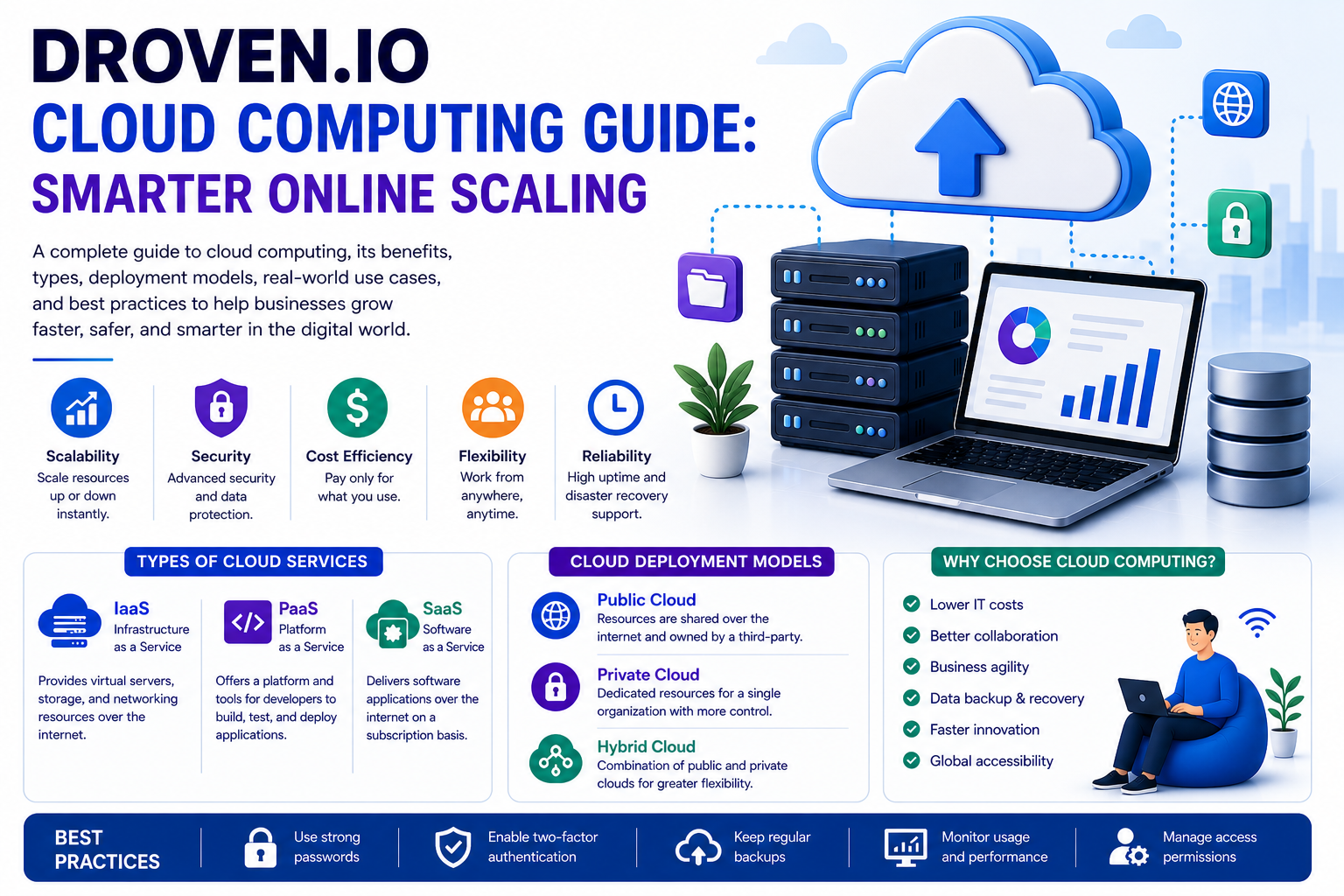
The Droven.io cloud computing guide explains how cloud technology helps companies improve performance, reduce costs, secure data, and scale operations without relying on expensive physical infrastructure.
Whether you run a startup, manage an online store, or operate a growing digital platform, understanding cloud computing can help you stay competitive in a rapidly changing online world.
Why Cloud Computing Is Transforming Business Operations
Traditional business systems were built around physical servers and local hardware. While that approach worked for years, it also created major limitations.
Businesses often faced:
- High hardware costs
- Maintenance expenses
- Limited storage
- Slow scalability
- Complex upgrades
Cloud computing changed the entire model.
Now organizations can access online infrastructure instantly instead of purchasing expensive equipment.
The Droven.io cloud computing guide focuses on how businesses use cloud systems to simplify operations and improve flexibility.
Instead of managing everything internally, companies can rent cloud resources only when needed.
That saves both time and money.
Cloud Computing Explained in Simple Words
Cloud computing means delivering computing services through the internet.
These services include:
- Online storage
- Databases
- Hosting
- Networking
- Applications
- Analytics tools
Rather than storing everything on one computer or office server, businesses can access resources remotely from secure cloud platforms.
You probably already use cloud technology every day.
Examples include:
- Google Drive
- Dropbox
- Netflix
- Zoom
- Spotify
All these platforms depend heavily on cloud infrastructure to operate efficiently worldwide.
The Droven.io cloud computing guide simplifies these concepts so beginners can understand them without technical confusion.
The Three Core Cloud Service Models
Cloud systems are generally divided into three major categories.
Each one supports different business needs.
Infrastructure as a Service (IaaS)
IaaS provides virtual infrastructure online.
Businesses can rent:
- Servers
- Storage
- Networking
- Computing resources
Instead of purchasing physical hardware, companies scale resources digitally.
Popular providers include:
- AWS
- Microsoft Azure
- Google Cloud Platform
Real-Life Example
A travel booking company experiences massive traffic spikes during holiday seasons.
Instead of buying permanent server upgrades, the company temporarily increases cloud resources only during peak demand periods.
This improves website stability while reducing unnecessary expenses.
The Droven.io cloud computing guide highlights IaaS as one of the most flexible solutions for fast-growing businesses.
Platform as a Service (PaaS)
PaaS provides developers with cloud-based environments for building applications.
The provider manages:
- Infrastructure
- Updates
- Security patches
- Operating systems
Developers focus entirely on application creation.
Real-Life Example
A startup building a healthcare appointment app uses cloud development platforms to launch features faster because infrastructure management is automated.
This speeds up innovation and reduces technical complexity.
Software as a Service (SaaS)
SaaS delivers software applications directly through browsers or apps.
Examples include:
- Gmail
- Slack
- Canva
- Trello
- Dropbox
Benefits include:
- No installation required
- Automatic updates
- Remote accessibility
- Subscription-based pricing
The Droven.io cloud computing guide explains SaaS as the easiest cloud model for beginners and small businesses.
Why Businesses Prefer Cloud Infrastructure
Cloud computing offers several practical benefits that directly impact business growth.
Lower Technology Costs
Traditional infrastructure requires:
- Expensive servers
- Maintenance teams
- Electricity
- Cooling systems
- Hardware upgrades
Cloud systems eliminate many of these costs.
Businesses only pay for the resources they actually use.
This makes cloud computing especially useful for startups and small companies with limited budgets.
Better Remote Collaboration
Cloud technology allows employees to work from almost anywhere.
Teams can access:
- Shared files
- Dashboards
- Communication systems
- Project management tools
Real-Life Example
A content marketing agency with employees across Pakistan, the UAE, and Malaysia uses cloud collaboration software daily to manage campaigns efficiently.
Without cloud systems, coordinating projects remotely would be far more difficult.
Improved Data Protection
Cloud providers invest heavily in security infrastructure.
Most platforms offer:
- Encryption
- Automatic backups
- Recovery systems
- Threat monitoring
- Access controls
The Droven.io cloud computing guide emphasizes that businesses must still follow smart security practices internally.
Faster Scalability
One of the biggest cloud advantages is scalability.
Businesses can instantly:
- Increase storage
- Upgrade server power
- Support higher traffic
- Expand globally
Traditional systems often require costly hardware upgrades to achieve similar growth.
Cloud infrastructure adapts much faster.
Public, Private, and Hybrid Cloud Models
Different organizations require different levels of control and flexibility.
Public Cloud
Public cloud systems are shared environments managed by large providers.
Best for:
- Blogs
- Startups
- Mobile apps
- Small businesses
Advantages:
- Affordable pricing
- Quick deployment
- Easy scaling
Private Cloud
Private cloud systems are dedicated to one organization only.
Best for:
- Banks
- Government agencies
- Healthcare companies
Advantages:
- Higher security
- Better control
- Stronger compliance management
Private clouds cost more but provide greater customization.
Hybrid Cloud
Hybrid cloud combines public and private infrastructure together.
Businesses keep sensitive data private while using public cloud resources for flexibility and scalability.
The Droven.io cloud computing guide recommends hybrid systems for companies balancing security with growth.
Common Cloud Computing Challenges
Cloud computing is powerful, but businesses should still understand possible challenges.
Dependence on Internet Connectivity
Cloud systems require stable internet access.
Poor connectivity can disrupt:
- Team collaboration
- File access
- Customer services
- Online operations
Reliable internet infrastructure remains essential.
Security Misconfigurations
Many cloud security issues happen because users configure systems incorrectly.
Businesses should:
- Use strong passwords
- Enable multi-factor authentication
- Restrict unnecessary access
- Monitor suspicious activity
Good internal practices matter as much as provider security.
Unexpected Cloud Expenses
Some businesses overspend because unused resources continue generating charges.
Practical Tip
Review monthly:
- Storage usage
- Active servers
- Subscription tools
- Traffic reports
Regular audits help reduce unnecessary costs.
Beginner-Friendly Steps to Start Using Cloud Systems
The Droven.io cloud computing guide makes cloud adoption easier by focusing on practical steps.
Step 1: Identify Your Needs
Understand your main goals first.
Examples:
- Website hosting
- Team collaboration
- File storage
- App development
- Data backups
Choosing the wrong solution wastes money and time.
Step 2: Start Small
Do not rush into expensive enterprise services immediately.
Begin with:
- Cloud storage tools
- Shared workspaces
- Basic hosting plans
Learning gradually reduces confusion.
Step 3: Compare Cloud Providers
Before selecting a provider, compare:
- Pricing
- Customer support
- Security features
- Scalability
- Uptime guarantees
Never make decisions based only on low pricing.
Step 4: Prioritize Security Early
Always:
- Create strong passwords
- Enable two-factor authentication
- Backup important files
- Restrict access permissions
Preventive security measures save businesses from major future problems.
Industries Using Cloud Computing Successfully
Cloud systems now support nearly every major industry.
Healthcare
Healthcare providers use cloud systems for:
- Patient records
- Telemedicine
- Appointment scheduling
- Medical data sharing
Cloud infrastructure improves efficiency and accessibility.
Education
Schools and universities use cloud platforms for:
- Online classes
- Collaboration
- Learning systems
- Assignment management
Students can learn from almost anywhere.
E-Commerce
Online stores depend heavily on cloud infrastructure for:
- Payment processing
- Product databases
- Traffic scaling
- Analytics
Without cloud systems, large traffic spikes could crash websites during major sales.
Entertainment and Streaming
Streaming platforms rely on cloud infrastructure for:
- Video delivery
- Music streaming
- Gaming
- Live broadcasts
Cloud networks improve global accessibility and performance.
Future Trends Changing Cloud Computing
Cloud technology continues evolving rapidly.
Several trends are shaping the future.
Artificial Intelligence Integration
AI is helping automate cloud management and optimize performance.
Edge Computing
Data processing is moving closer to users for faster response times.
Sustainable Cloud Infrastructure
Companies are investing in energy-efficient data centers and environmentally friendly operations.
Multi-Cloud Strategies
Businesses increasingly use multiple providers instead of relying on one platform.
The Droven.io cloud computing guide highlights these trends as important opportunities for future growth.
People Also Ask
What is cloud computing in simple terms?
Cloud computing means using internet-based servers and services instead of relying entirely on local hardware or physical infrastructure.
Why do businesses use cloud computing?
Businesses use cloud systems to reduce costs, improve flexibility, support remote work, and scale operations efficiently.
Is cloud computing secure?
Modern cloud providers offer advanced security features, but businesses must also follow strong internal security practices.
Can small businesses use cloud computing?
Yes. Cloud computing is highly beneficial for small businesses because it reduces upfront costs and improves scalability.
What is the biggest advantage of cloud computing?
Scalability is one of the biggest advantages because businesses can instantly increase or reduce resources depending on demand.
Smart Tips Before Choosing a Cloud Provider
Before selecting any cloud service:
- Compare pricing carefully
- Study backup policies
- Check uptime guarantees
- Review support quality
- Understand long-term scalability options
You can also improve SEO structure by adding related internal content like hosting guides for better user navigation.
Final Thoughts
Cloud computing is no longer optional for businesses trying to compete online. It has become the foundation of modern digital operations across industries.
From startups and bloggers to global enterprises, organizations use cloud systems to improve speed, reduce costs, support remote teams, and scale faster than traditional infrastructure allows.
What makes the Droven.io cloud computing guide valuable is its practical and beginner-friendly approach. Instead of focusing only on technical complexity, it explains how cloud systems solve real-world business problems.
As digital competition continues growing, businesses that understand cloud computing today will be far better prepared for future innovation and online success.