



Walk into any house and you can tell within seconds whether someone lives there or just sleeps there. That difference isn’t about money — it’s about intention. If you’ve ever wondered how to decorate a house so it actually feels like yours, the good news is that it comes down to a handful of decisions, not a designer’s budget.
This guide walks through the process room by room, with practical tips you can start using today, whether you’re furnishing your first apartment or refreshing a home you’ve lived in for years.
Start With How You Actually Live, Not How Pinterest Lives
Before you buy a single throw pillow, sit down and think about your daily routine. Do you eat dinner on the couch? Do guests drop by often? Is the dining table actually used for dining, or does it become a mail-sorting station by Tuesday?
Too many people try to decorate a house based on a magazine spread instead of their own habits, and within a month the “perfect” living room feels stiff and unused. A better approach is to design around real life first, then layer style on top.
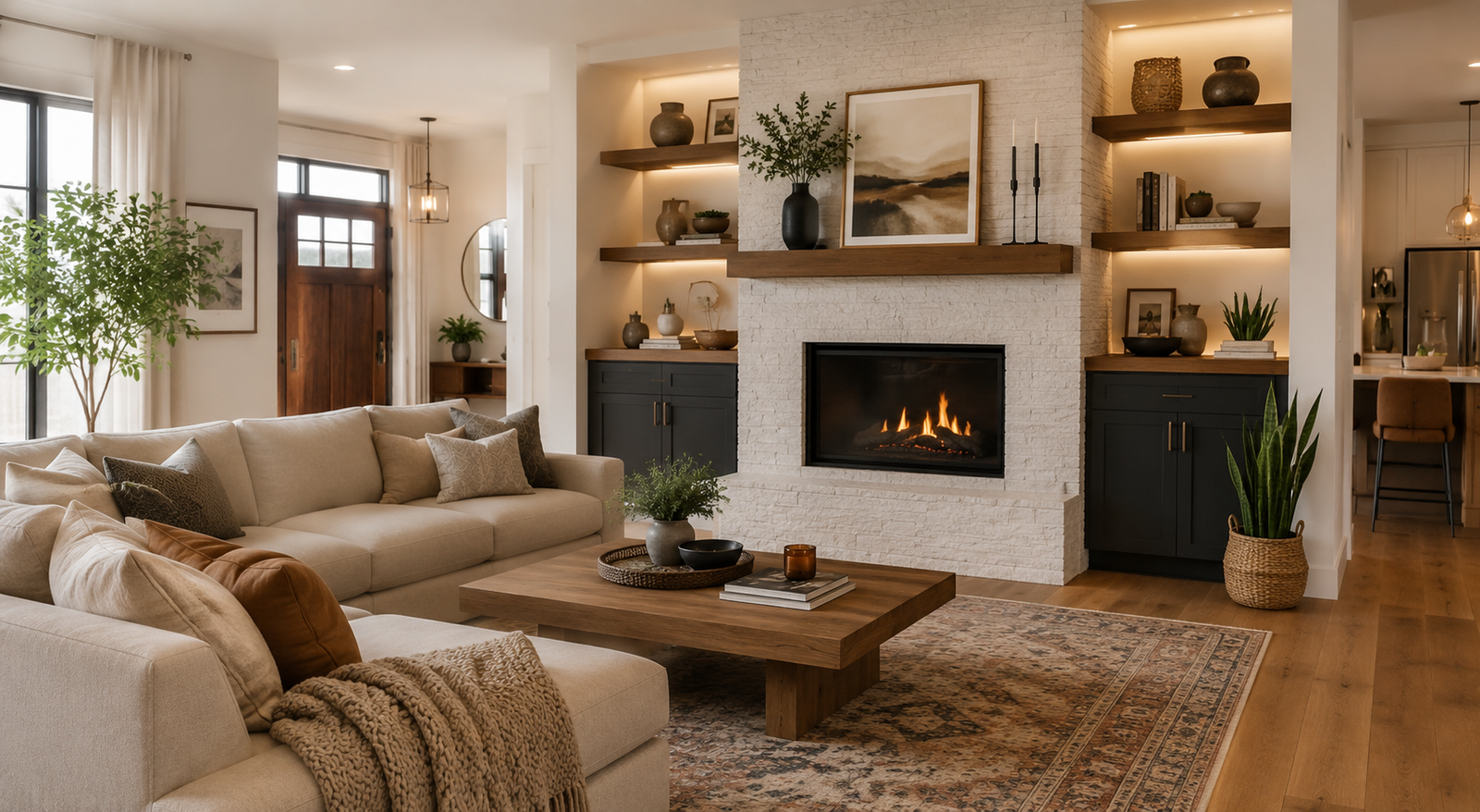
Real-life example: A friend of mine redesigned her living room around a giant, plush sectional because she and her husband host game nights every Friday. It wasn’t the sleekest choice, but three years later, that couch is still the heart of the house — because it matched how they actually live.
Choose a Color Story Before You Choose Furniture
One of the fastest ways to decorate a house so it feels cohesive is to pick a color story early — not just a favorite color, but a small palette of 3 to 5 shades that will repeat throughout the home. This keeps every room feeling connected instead of like a collection of unrelated purchases.
A simple formula that works almost anywhere:
- One neutral base (warm white, greige, or soft sand)
- One deeper anchor tone (navy, charcoal, or forest green)
- One accent color that shows up in smaller doses (rust, mustard, dusty pink)
Once you lock this in, every decision — paint, rugs, curtains, even artwork — becomes easier because you already have a filter to run choices through.
Decorate a House Layer by Layer, Not All at Once
Professional decorators rarely finish a room in one shopping trip, and you shouldn’t either. Instead, build each space in layers:
- Foundation layer – flooring, wall color, big furniture pieces
- Function layer – lighting, storage, window treatments
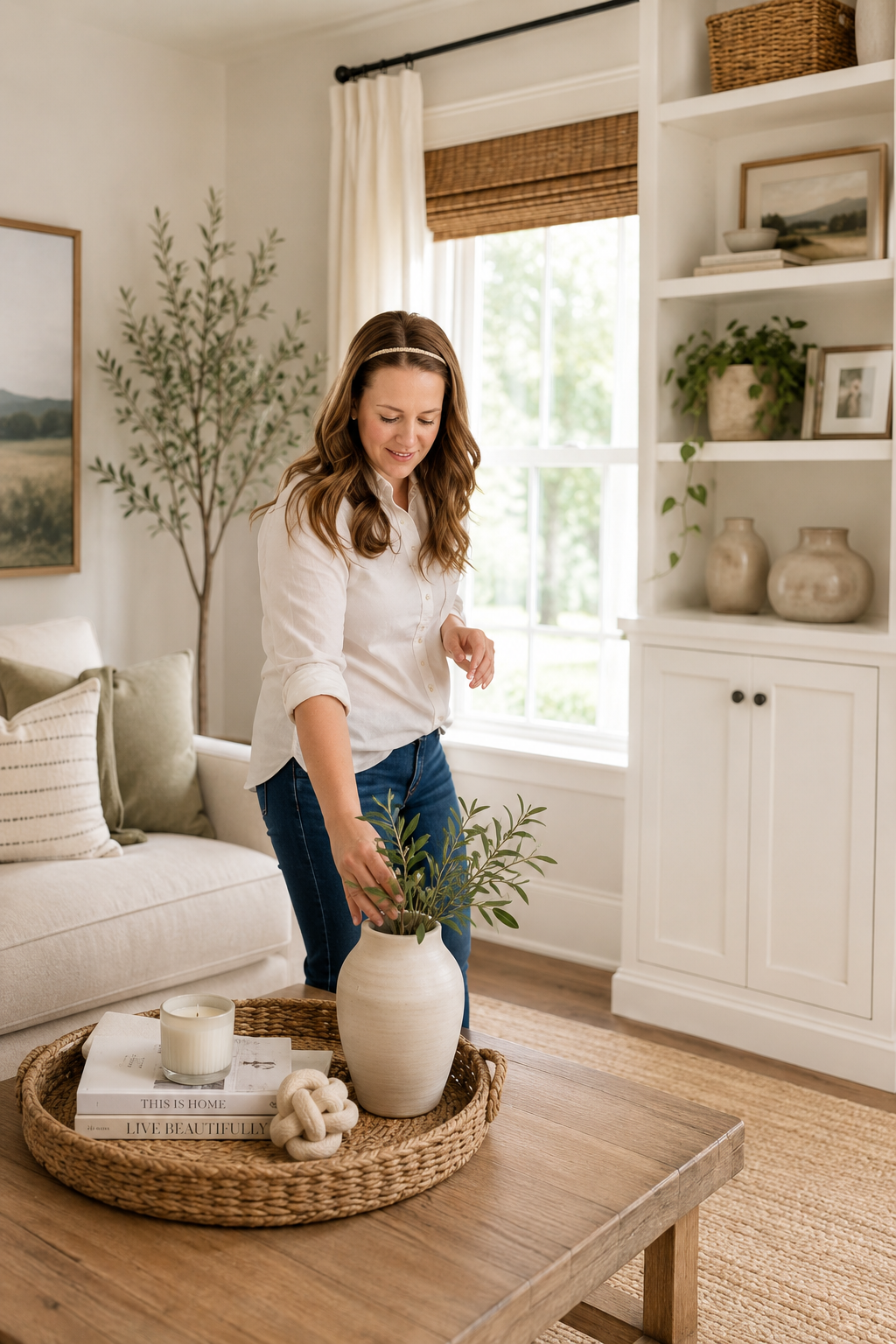
- Personality layer – art, textiles, plants, books, personal objects
This layered approach to decorating a house prevents the common mistake of buying everything at once and ending up with a room that looks like a showroom instead of a home. It also spreads out the cost, which makes the whole project far less overwhelming.
Real-life example: When my brother moved into his first house, he spent the first month just painting and arranging furniture. Only in month two did he add curtains and rugs. By month three, he was hanging art and setting out the ceramic bowls his grandmother left him. The slower pace meant every piece actually meant something instead of being a rushed filler.
Lighting Changes Everything — Use It on Purpose
If you only take one tip from this article, let it be this: lighting can make or break how a home feels far more than furniture or paint ever will. A dim, single overhead bulb makes even a beautifully furnished room feel flat and cold.
To decorate a house with lighting that actually flatters the space, aim for at least three light sources per room:
- Ambient light (ceiling fixture or recessed lighting) for general brightness
- Task light (a reading lamp, under-cabinet kitchen lights) for function
- Accent light (a floor lamp in a corner, string lights, a lit bookshelf) for warmth and mood
Swapping harsh white bulbs for warm-toned ones (around 2700K–3000K) is one of the cheapest upgrades you can make, and it instantly makes a space feel cozier.
Mix Old and New So the House Doesn’t Look Staged
A house furnished entirely from one store, in one season, tends to look like a catalog page rather than someone’s home. To decorate a house so it feels lived-in and personal, mix pieces from different eras and sources:
- A vintage mirror found at a flea market
- A modern sofa from a mainstream retailer
- A handmade rug from a local artisan
- A hand-me-down side table refinished with new hardware
This blend gives a room texture and a story. It also protects you from the trend cycle — when everything matches perfectly and comes from one collection, the whole look feels dated the moment the trend passes.
Real-life example: One couple I know decorated their entire dining room around a single flea-market find: a scratched but beautiful oak table. They built the rest of the room — chairs, lighting, even the wall color — to complement that one imperfect, characterful piece, and it became the most complimented room in their house.
Don’t Ignore the Walls
Blank walls are one of the biggest reasons a decorated house still feels unfinished. But “decorating the walls” doesn’t have to mean expensive art. Consider:
- A gallery wall of mixed frame sizes and personal photos
- Textured wallpaper on just one accent wall
- Woven baskets or plates arranged as sculptural pieces
- Floating shelves styled with books, plants, and small objects
The goal isn’t to fill every inch — it’s to give the eye a few intentional places to land. When you decorate a house, empty wall space is only a problem if it looks accidental rather than deliberate; a large, calm wall with one striking piece of art can be more powerful than a cluttered one.
Bring the Outdoors In
Plants are one of the most affordable ways to decorate a house and instantly make it feel more alive. Even a few low-maintenance options — pothos, snake plants, ZZ plants — add color, texture, and softness that furniture alone can’t provide.
If you don’t trust yourself with real plants, high-quality faux greenery has come a long way and can still soften a room’s hard edges (just dust it occasionally so it doesn’t look tired).
Natural materials work the same magic: a jute rug, a rattan chair, a wooden bowl on the coffee table. These textures ground a space and keep it from feeling too polished or cold.
Small Rooms Need Restraint, Not More Stuff
If you’re decorating a smaller house or apartment, resist the urge to fill every corner. Overcrowding is the fastest way to make a small space feel even smaller. Instead:
- Choose furniture with visible legs (it lets light pass underneath, making the room feel more open)
- Use mirrors to bounce light and create the illusion of depth
- Stick closer to your color story with fewer competing accent colors
- Pick a few statement pieces instead of many small ones
Decorating a house on the smaller side is really an exercise in editing — deciding what earns a place in the room, and letting go of the rest.
Budget-Friendly Ways to Decorate a House Without Overspending
You don’t need a large budget to decorate a house well. Some of the most effective, low-cost updates include:
- Repainting a single wall or piece of furniture
- Rearranging existing furniture before buying anything new
- Swapping hardware on cabinets and doors
- Adding new throw pillow covers instead of new pillows
- Framing free or low-cost prints, postcards, or fabric scraps
- Shopping secondhand for one-of-a-kind pieces at a fraction of retail price
Often, the difference between a house that feels decorated and one that doesn’t isn’t spending more — it’s spending more thoughtfully.
Bringing It All Together
Learning how to decorate a house isn’t about memorizing rules; it’s about building a space that reflects how you actually live, layered thoughtfully over time. Start with your habits, settle on a color story, build in layers, get the lighting right, mix old with new, and don’t forget the walls and the greenery.
Give yourself permission to decorate a house slowly. The homes that feel the warmest and most personal are almost never finished in a weekend — they’re built gradually, piece by piece, until one day you look around and realize it finally feels like home.
read more trending blogs on world daily drift.