





Walk down any street and you’ll notice something interesting — houses don’t just look different because of paint color. They feel different. That feeling comes from architectural style, the underlying language of shape, structure, and detail that gives a building its personality.
If you’ve ever wondered what “basic architectural style” actually means, or how to tell one style apart from another, you’re not alone. It’s one of those terms people use casually but rarely explain clearly. So let’s break it down in plain language.
Defining Architectural Style in Simple Terms
At its core, architectural style refers to a recognizable set of design features — rooflines, materials, window shapes, ornamentation, and proportions — that define how a building looks and, to some extent, how it functions. Think of it as a visual signature. Just as fashion trends reflect an era, a building’s architectural style reflects the time, culture, and technology that shaped it.
When people ask “what is basic architectural style,” they usually want to understand the foundational categories — the building blocks before you get into hybrid or highly customized designs. So instead of diving into obscure sub-movements, let’s focus on what actually forms the base of most architectural styles you’ll encounter in everyday life.
The Core Elements That Shape Any Architectural Style
Every architectural style, no matter how simple or elaborate, is built from a handful of shared ingredients:
- Form and massing — the overall shape and volume of the structure
- Roof design — pitched, flat, gabled, hipped, or mansard
- Materials — brick, wood, stone, stucco, glass, steel
- Symmetry and proportion — balanced facades versus asymmetrical layouts
- Ornamentation — trim, columns, moldings, or the deliberate lack of them
- Window and door treatment — size, spacing, and framing
When these elements combine consistently, they form a recognizable architectural style. Change even one or two, and you start moving into a different category altogether. This is why two houses with the same floor plan can look completely unrelated once their rooflines and materials differ.
Common Basic Architectural Styles You Should Know
Let’s look at a few foundational styles that most conversations about architecture eventually circle back to.
1. Colonial Style
One of the most recognizable architectural styles in North America, Colonial design is defined by symmetry — a centered front door, evenly spaced windows, and a simple rectangular footprint. Think of the classic red-brick house with white shutters and a modest front porch. It’s clean, orderly, and built around balance rather than flair.
Real-life example: Many historic neighborhoods in New England still showcase this architectural style almost untouched, with two-story facades and minimal exterior decoration.
2. Craftsman Style
Popular in the early 20th century, the Craftsman architectural style emphasizes handcrafted details — exposed rafters, low-pitched roofs, and wide front porches supported by tapered columns. It’s warm, earthy, and closely tied to natural materials like wood and stone.
Real-life example: Bungalow-style homes in cities like Pasadena, California, are textbook Craftsman architecture, complete with built-in shelving and stone porch bases.
3. Modern/Contemporary Style
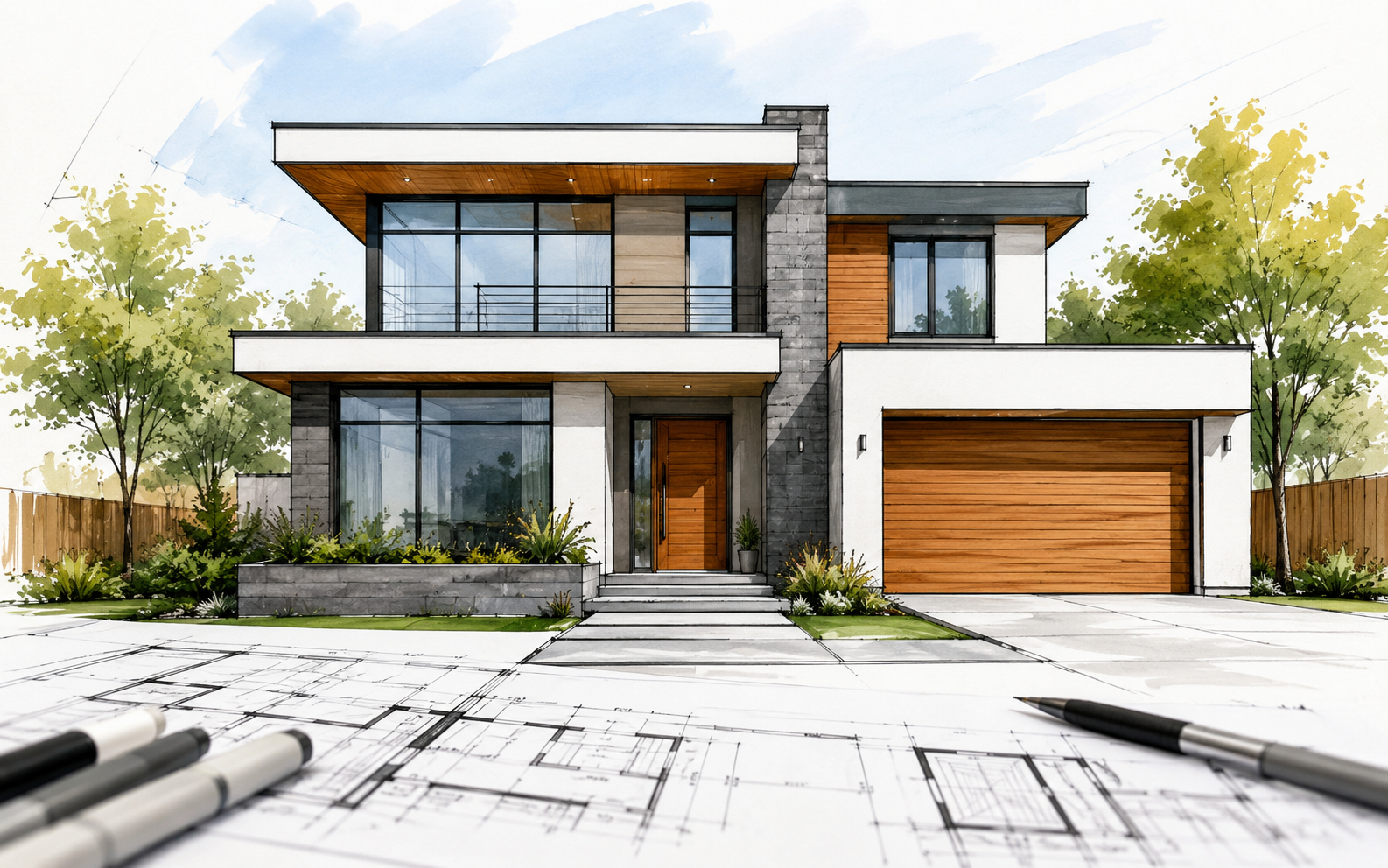
This architectural style strips things down. Clean lines, open floor plans, large glass windows, and minimal ornamentation define the look. It favors function over decoration, often using materials like concrete, steel, and glass to create bold, uncluttered facades.
Real-life example: Many custom-built homes in suburban developments today borrow from this architectural style, favoring flat or low-slope roofs and expansive window walls that blur the line between indoor and outdoor space.
4. Mediterranean Style
Inspired by coastal European architecture, this style features stucco walls, terracotta roof tiles, arched doorways, and wrought-iron accents. It’s warm, textured, and closely associated with sunny climates.
Real-life example: Neighborhoods across Florida and Southern California frequently showcase this architectural style, especially in gated communities built during the 1980s and 90s housing boom.
Why People Confuse Architectural Styles
Here’s where things get tricky. Many homes today are hybrids — a Craftsman porch attached to a Colonial layout, or Mediterranean rooflines paired with modern window design. Builders often blend elements to appeal to broader tastes, which makes identifying a “pure” architectural style harder than it used to be.
That’s why understanding the basic architectural style categories first is so valuable. Once you know the fundamentals, you can spot which influences are blended into a newer or custom design, even if it doesn’t fit neatly into one box.
How Architectural Style Differs from Architectural Design
It’s worth clarifying a common mix-up. Architectural style refers to the recognizable, historically rooted category a building belongs to — Colonial, Craftsman, Modern, and so on. Architectural design, on the other hand, is the broader creative process of planning a structure, which may or may not follow a defined style at all.
In other words, every building has a design, but not every building fits cleanly into a specific architectural style. Some are intentionally eclectic, borrowing bits and pieces from multiple traditions to create something new.
Why Understanding Basic Architectural Style Matters
You might be thinking — why does this matter if I’m not an architect? A few practical reasons:
If you’re buying a home, knowing the architectural style helps you predict maintenance needs. A Mediterranean-style tile roof, for instance, behaves very differently from a Colonial-style asphalt shingle roof in terms of cost and lifespan.
If you’re renovating, staying consistent with the existing architectural style (or intentionally contrasting it) affects resale value and neighborhood harmony. Many historic districts even have regulations protecting original architectural style elements.
If you’re just curious, recognizing architectural style turns an ordinary walk or drive into something more engaging. You start noticing rooflines, trim work, and window patterns you never paid attention to before.
A Quick Way to Identify Architectural Style at a Glance
Next time you’re looking at a building, try this simple mental checklist:
- Look at the roof first. Steep and pitched often points to Colonial or Craftsman. Flat or low-slope suggests Modern. Curved terracotta tiles signal Mediterranean.
- Check the symmetry. Balanced, mirror-image facades usually mean Colonial influence. Asymmetry often points to Craftsman or Contemporary design.
- Study the materials. Brick and wood siding lean traditional. Stucco and iron detailing suggest Mediterranean. Glass and steel scream Modern.
- Note the ornamentation. Heavy trim and columns suggest older, more decorative architectural style traditions. Minimal detailing points toward newer, function-first design philosophies.
This won’t make you an expert overnight, but it’s enough to hold your own in a conversation about architectural style — or to describe what you’re looking for when talking to a builder or real estate agent.
Final Thoughts
At the end of the day, architectural style is simply the visual vocabulary buildings use to communicate their era, purpose, and personality. Whether it’s the symmetrical calm of Colonial design, the handcrafted warmth of Craftsman homes, the clean confidence of Modern architecture, or the sun-soaked charm of Mediterranean style, each one tells a story through form and material.
Understanding these basics doesn’t just help you label a building correctly — it helps you appreciate the thinking behind it. And once you start noticing architectural style in the world around you, it’s genuinely hard to stop.
read more trending blogs on world daily drift.